
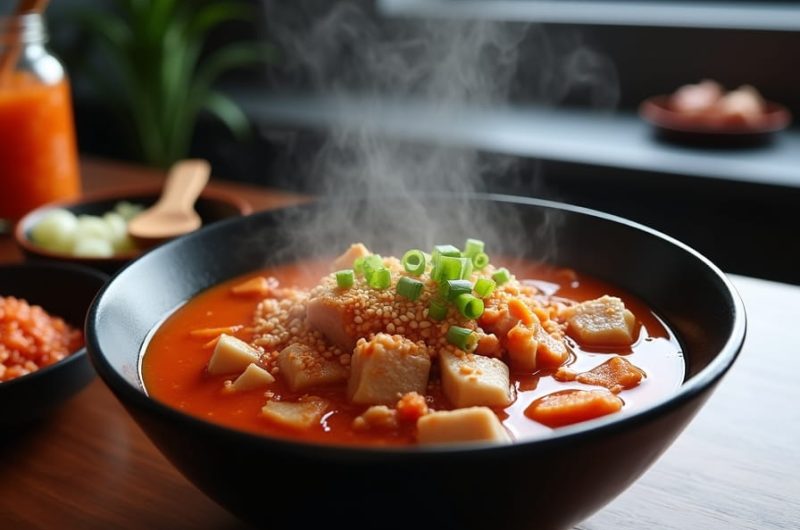
Pork and Kimchi Stew, known as Kimchi Jjigae, is one of the most beloved comfort foods in Korean cuisine. This deeply flavorful stew is built on well-fermented kimchi, tender pork, and a rich, spicy broth that simmers until everything comes together in perfect harmony.
It is warming, hearty, and incredibly satisfying, making it a staple in Korean households and a favorite dish during colder days or whenever a comforting meal is needed.
Why I Love This Recipe
I love this recipe because it transforms simple ingredients into something bold and deeply nourishing. The way aged kimchi melts into the broth creates layers of tangy, savory, and spicy flavors that feel both comforting and exciting. It is a forgiving recipe that tastes even better the longer it cooks, and it always delivers a sense of home and warmth in every spoonful.
Why This Is a Must-Try Dish
This is a must-try dish because it represents the heart of Korean home cooking. Kimchi Jjigae is rich in flavor, easy to customize, and incredibly filling. It is also a great way to use well-fermented kimchi, turning it into a deeply satisfying stew that pairs perfectly with rice and simple side dishes.
Preparation Time, Cooking Time, and Serving Information
Preparation Time: 15 minutes
Cooking Time: 40 minutes
Servings: 4
Calories: Approximately 420 calories per serving
Course: Main Course
Cuisine: Korean
Ingredients
For the Stew:
- 2 cups well-fermented kimchi, chopped
- 200 grams pork belly or pork shoulder, sliced into bite-sized pieces
- 1 tablespoon sesame oil
- 1 tablespoon vegetable oil
- 1 tablespoon gochujang
- 1 teaspoon gochugaru
- 1 teaspoon soy sauce
- 3 cups anchovy-kelp stock or water
- 1 small onion, sliced
- 2 cloves garlic, minced
- 150 grams firm tofu, cubed
- 2 green onions, chopped
- Salt to taste
Cooking Directions
Sauté the Pork and Kimchi:
Heat vegetable oil and sesame oil in a pot over medium heat. Add pork and cook until lightly browned. Add kimchi and sauté for several minutes until fragrant and slightly softened.
Build the Broth:
Stir in gochujang, gochugaru, soy sauce, onion, and garlic. Cook briefly to deepen the flavors, then pour in the anchovy-kelp stock.
Simmer the Stew:
Bring to a gentle boil, then reduce heat and simmer uncovered for 25 to 30 minutes to allow flavors to develop.
Finish with Tofu:
Add tofu cubes and simmer for an additional 5 to 10 minutes. Taste and adjust seasoning with salt if needed. Garnish with green onions before serving.
Step-by-Step Preparation Method
Step 1: Chop kimchi and slice pork into bite-sized pieces.
Step 2: Heat oils in a pot and sauté pork until lightly browned.
Step 3: Add kimchi and cook until fragrant and softened.
Step 4: Stir in gochujang, gochugaru, soy sauce, onion, and garlic.
Step 5: Add stock and simmer until rich and flavorful.
Step 6: Add tofu and simmer briefly before serving.

How to Serve This Recipe
Serve Pork and Kimchi Stew piping hot in deep bowls alongside steamed white rice. It pairs beautifully with simple Korean side dishes such as seasoned spinach, pickled radish, or fried eggs. Traditionally, it is enjoyed family-style, straight from the pot.
Recipe Tips
Use Aged Kimchi: Well-fermented kimchi gives the stew its signature depth and tang.
Do Not Rush the Simmer: Longer simmering enhances flavor richness.
Adjust Spice Level: Increase or reduce gochugaru according to preference.
Use Pork Belly for Richness: Pork belly adds a deeper, more luxurious flavor.
Variations
Tuna Kimchi Jjigae: Replace pork with canned tuna for a lighter version.
Seafood Kimchi Jjigae: Add shrimp or clams for a seafood twist.
Vegetarian Version: Use mushrooms and tofu with vegetable stock instead of pork.
Extra Hearty Stew: Add sliced zucchini or canned beans for more substance.
Freezing and Storage
Refrigeration: Store leftovers in an airtight container for up to 3 days.
Freezing: Freeze without tofu for up to 1 month for best texture.
Reheating: Reheat gently on the stove, adding a little water if needed.
Special Equipment Needed
- Medium-sized pot or Korean earthenware pot
- Sharp knife
- Cutting board
Frequently Asked Questions
Can I use fresh kimchi?
Fresh kimchi can be used, but aged kimchi provides better depth of flavor.
What cut of pork works best?
Pork belly is traditional, but pork shoulder works well for a leaner option.
Is anchovy stock necessary?
Anchovy-kelp stock adds umami, but water can be used if unavailable.
Can I make this less spicy?
Yes, reduce gochugaru and gochujang while keeping the kimchi for flavor.
Conclusion
Pork and Kimchi Stew is a comforting, deeply flavorful dish that captures the essence of Korean home cooking. With its rich broth, tender pork, and tangy kimchi, it is a satisfying meal that warms both body and soul. Whether enjoyed on a cold day or as a hearty everyday meal, Kimchi Jjigae is a timeless recipe worth mastering and savoring.
Pork and Kimchi Stew (Kimchi Jjigae)

Ingredients
- For the Stew:
- 2 cups well-fermented kimchi, chopped
- 200 grams pork belly or pork shoulder, sliced into bite-sized pieces
- 1 tablespoon sesame oil
- 1 tablespoon vegetable oil
- 1 tablespoon gochujang
- 1 teaspoon gochugaru
- 1 teaspoon soy sauce
- 3 cups anchovy-kelp stock or water
- 1 small onion, sliced
- 2 cloves garlic, minced
- 150 grams firm tofu, cubed
- 2 green onions, chopped
- Salt to taste
Instructions
- Step 1: Chop kimchi and slice pork into bite-sized pieces.
- Step 2: Heat oils in a pot and sauté pork until lightly browned.
- Step 3: Add kimchi and cook until fragrant and softened.
- Step 4: Stir in gochujang, gochugaru, soy sauce, onion, and garlic.
- Step 5: Add stock and simmer until rich and flavorful.
- Step 6: Add tofu and simmer briefly before serving.