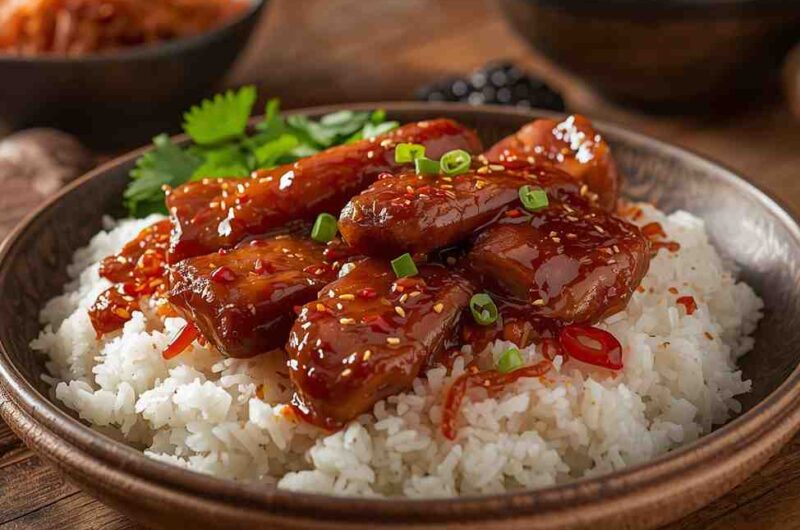
Spicy Pork Bulgogi—known in Korean as Dwaeji Bulgogi (돼지불고기)—is a fiery, flavor-packed dish that perfectly captures the essence of Korean comfort food. Tender slices of pork are marinated in a bold, umami-rich sauce made with gochujang (Korean chili paste), soy sauce, garlic, ginger, and sesame oil, then quickly stir-fried until caramelized and juicy. Served over warm steamed rice with tangy, crunchy kimchi, it’s a delightful balance of spicy, sweet, savory, and smoky flavors in every bite.
What makes this dish special is its versatility and vibrant flavor profile. It’s bold enough for spice lovers yet balanced with sweetness from the marinade and freshness from the side of kimchi. It’s one of those dishes that can make any weeknight dinner feel like a trip to Seoul.
Why I Love This Recipe
I love this recipe because it’s the perfect combination of simplicity and satisfaction. The marinade does all the heavy lifting—infusing the pork with layers of deep flavor long before it hits the pan. Once cooked, the pork becomes irresistibly juicy with a smoky-sweet-spicy glaze that clings beautifully to each piece.
Plus, this dish brings a sense of warmth and excitement to the dinner table. Every bite is an explosion of taste—heat from gochujang, savoriness from soy sauce, and a hint of sweetness from sugar or honey. It’s comfort food with attitude, and it pairs so effortlessly with rice and kimchi that it becomes a complete meal in one bowl.
Why It’s a Must-Try Dish
Spicy Pork Bulgogi is a must-try because it delivers restaurant-quality Korean flavors right at home. It’s quick to prepare, budget-friendly, and requires only a few key ingredients. The result? A dish that’s both satisfying and exciting to eat.
If you’ve only ever tried beef bulgogi, this spicy pork version will be a revelation—bolder, zestier, and bursting with character. The gochujang marinade gives it a depth that keeps you coming back for more. It’s also a great gateway dish for anyone exploring Korean cuisine, as it’s easy to make yet authentically flavorful.
Preparation and Cooking Details
- Preparation Time: 20 minutes (plus 30–60 minutes marinating time)
- Cooking Time: 10–15 minutes
- Total Time: 45–75 minutes
- Servings: 4
- Course: Main Course
- Cuisine: Korean
- Calories: ~480 kcal per serving (including rice and kimchi)
Ingredients
For the Marinade:
- 500g (1 lb) pork shoulder or pork belly, thinly sliced
- 3 tbsp gochujang (Korean red chili paste)
- 1 tbsp gochugaru (Korean red chili flakes, optional for extra spice)
- 3 tbsp soy sauce
- 2 tbsp brown sugar or honey
- 2 tbsp rice wine (mirin or sake can be used)
- 1 tbsp sesame oil
- 4 cloves garlic, minced
- 1 tbsp ginger, grated
- 1 small onion, grated or finely chopped
- 2 green onions, finely chopped
- 1 tbsp vegetable oil (for cooking)
For Serving:
- 3 cups steamed white rice (short-grain preferred)
- 1 cup kimchi (store-bought or homemade)
- Toasted sesame seeds (for garnish)
- Sliced green onions (for garnish)
Cooking Directions
Step-by-Step Preparation Method:
Step 1: Prepare the Pork
- Choose a tender cut such as pork shoulder or pork belly.
- Slice it thinly—partially freezing the meat for 15 minutes helps make slicing easier.
Step 2: Make the Marinade
- In a large mixing bowl, combine gochujang, gochugaru, soy sauce, brown sugar, rice wine, sesame oil, garlic, ginger, onion, and green onions.
- Mix well until the sauce is smooth and evenly blended.
Step 3: Marinate the Pork
- Add the sliced pork to the marinade, coating every piece thoroughly.
- Cover and refrigerate for at least 30 minutes (up to overnight for deeper flavor).
Step 4: Cook the Pork Bulgogi
- Heat 1 tbsp vegetable oil in a large skillet or wok over medium-high heat.
- Add the marinated pork in a single layer (cook in batches if necessary).
- Stir-fry for 8–10 minutes, until the pork is cooked through and slightly caramelized.
- Let the sauce thicken slightly in the pan—it should cling to the meat and look glossy.
Step 5: Serve
- Spoon hot steamed rice into bowls.
- Top with generous portions of spicy pork bulgogi.
- Garnish with toasted sesame seeds and sliced green onions.
- Serve with a side of kimchi for authentic Korean flair.
How to Serve This Recipe
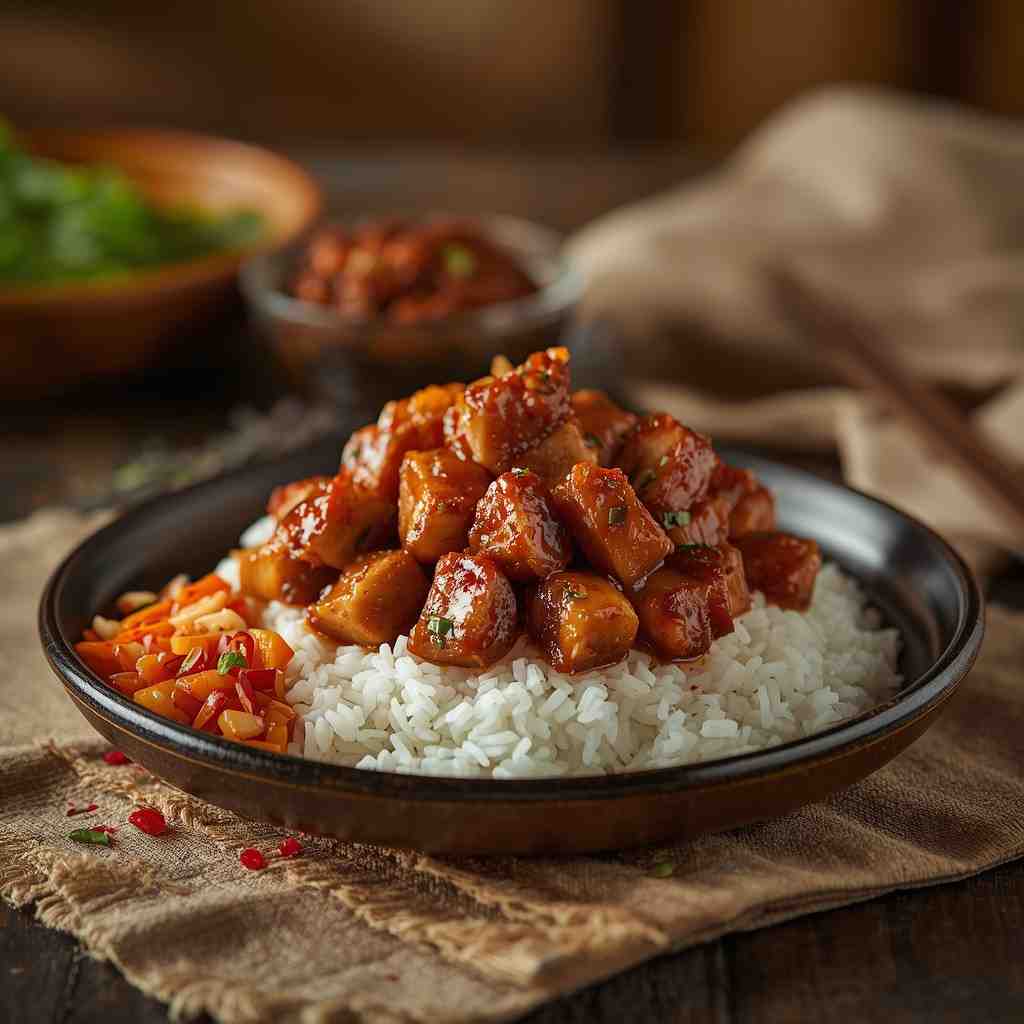
Spicy Pork Bulgogi is best served family-style—a big sizzling platter of pork surrounded by bowls of hot rice, kimchi, and maybe even some lettuce leaves for wrapping. You can also serve it with Korean banchan (side dishes) like pickled radish, seasoned spinach, or bean sprouts.
For a casual meal, simply serve it over rice with kimchi on the side. For a fancier presentation, arrange it on a large plate, sprinkle sesame seeds on top, and serve with chopsticks and small bowls of condiments.
Recipe Tips
- Use thinly sliced meat: The thinner the slices, the faster they cook and absorb flavor.
- Marinate longer for deeper taste: Overnight marination gives the best results.
- Adjust spice level: Reduce gochujang or skip gochugaru for a milder version.
- Add vegetables: Onions, carrots, mushrooms, or cabbage make great additions.
- Don’t overcrowd the pan: Cook in batches to allow proper caramelization.
Variations
- Sweet Pork Bulgogi: Add a grated pear or apple to the marinade for a natural sweetness and tender texture.
- Spicy Chicken Bulgogi: Substitute pork with chicken thighs for a lighter version.
- Vegetarian Bulgogi: Use tofu or mushrooms instead of meat and marinate them the same way.
- Korean BBQ Style: Grill the marinated pork on a hot plate or outdoor grill for a smoky, charred flavor.
- Rice Bowl Version: Serve the cooked pork over rice with fried eggs and sautéed vegetables for a hearty Korean rice bowl.
Freezing and Storage
- Refrigeration: Store cooked pork bulgogi in an airtight container in the fridge for up to 3 days.
- Freezing (Marinated or Cooked):
- You can freeze marinated raw pork for up to 2 months.
- Cooked pork can be frozen for up to 1 month.
- Reheating: Reheat in a skillet or microwave until heated through. If it looks dry, add a splash of water or broth.
Special Equipment Needed
- Sharp knife (for thin slicing)
- Large mixing bowl
- Skillet or wok
- Tongs or spatula
- Measuring spoons and cups
FAQ
Q1. Can I make this less spicy?
Yes! Reduce the gochujang to 1 tablespoon and skip the gochugaru. You’ll still get rich flavor without intense heat.
Q2. What cut of pork works best?
Pork shoulder and pork belly are ideal—they have enough fat to stay juicy during cooking.
Q3. Can I use beef instead?
Absolutely! Substitute pork with thinly sliced beef ribeye or sirloin for a different version of bulgogi.
Q4. Do I need to use Korean chili paste (gochujang)?
Yes, gochujang is essential for authentic flavor. It provides a unique mix of spice, sweetness, and umami that’s hard to replicate.
Q5. What can I serve on the side?
Steamed rice, kimchi, pickled radish, seaweed salad, or a simple cucumber salad complement this dish perfectly.
Conclusion
Spicy Pork Bulgogi with Rice and Kimchi is the ultimate comfort dish for anyone who loves bold, satisfying flavors. With its perfect balance of heat, sweetness, and savoriness, it’s a dish that never fails to impress. Whether you’re cooking for yourself or sharing it with friends, it brings the joy of Korean cuisine right to your kitchen.
Once you try it, it’ll become one of those recipes you make again and again—because it’s not just food, it’s an experience of flavor, warmth, and culture in every bite.
Spicy Pork Bulgogi with Rice and Kimchi
Course: DinnerDifficulty: Easy4
servings30
minutes15
minutes45
minutesIngredients
For the Marinade:
500g (1 lb) pork shoulder or pork belly, thinly sliced
3 tbsp gochujang (Korean red chili paste)
1 tbsp gochugaru (Korean red chili flakes, optional for extra spice)
3 tbsp soy sauce
2 tbsp brown sugar or honey
2 tbsp rice wine (mirin or sake can be used)
1 tbsp sesame oil
4 cloves garlic, minced
1 tbsp ginger, grated
1 small onion, grated or finely chopped
2 green onions, finely chopped
1 tbsp vegetable oil (for cooking)
For Serving:
3 cups steamed white rice (short-grain preferred)
1 cup kimchi (store-bought or homemade)
Toasted sesame seeds (for garnish)
Sliced green onions (for garnish)
Directions
- Step 1: Prepare the Pork : Choose a tender cut such as pork shoulder or pork belly. Slice it thinly—partially freezing the meat for 15 minutes helps make slicing easier.
- Step 2: Make the Marinade : In a large mixing bowl, combine gochujang, gochugaru, soy sauce, brown sugar, rice wine, sesame oil, garlic, ginger, onion, and green onions. Mix well until the sauce is smooth and evenly blended.
- Step 3: Marinate the Pork : Add the sliced pork to the marinade, coating every piece thoroughly. Cover and refrigerate for at least 30 minutes (up to overnight for deeper flavor).
- Step 4: Cook the Pork Bulgogi : Heat 1 tbsp vegetable oil in a large skillet or wok over medium-high heat. Add the marinated pork in a single layer (cook in batches if necessary). Stir-fry for 8–10 minutes, until the pork is cooked through and slightly caramelized. Let the sauce thicken slightly in the pan—it should cling to the meat and look glossy.
- Step 5: Serve Spoon hot: steamed rice into bowls. Top with generous portions of spicy pork bulgogi. Garnish with toasted sesame seeds and sliced green onions. Serve with a side of kimchi for authentic Korean flair.