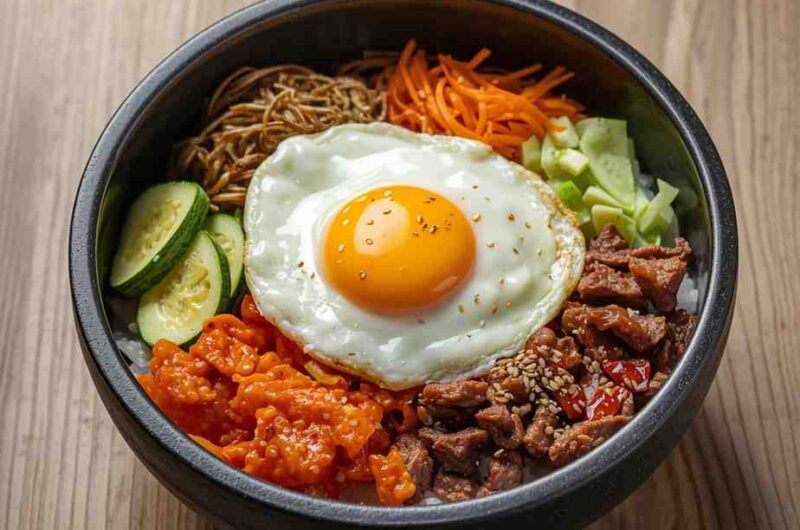
Bibimbap (pronounced bee-bim-bahp) literally means “mixed rice” in Korean — and it’s exactly that: a vibrant, wholesome bowl of steamed rice topped with an assortment of sautéed vegetables, flavorful marinated beef or tofu, a perfectly fried egg, and a generous drizzle of gochujang (Korean red chili paste).
Bibimbap is one of Korea’s most beloved dishes, known for its perfect balance of sweet, spicy, savory, and umami. The fried egg on top adds richness, the veggies bring freshness, and the gochujang sauce ties it all together into a bowl of pure comfort.
Why I Love This Recipe
I love Korean Bibimbap Rice Bowl because it’s healthy, satisfying, and incredibly flavorful. Every bite feels different — a little crunchy, a little spicy, a little creamy from the egg yolk.
It’s the kind of dish that makes you appreciate the beauty of simple ingredients cooked thoughtfully. I especially adore how versatile it is — you can use whatever vegetables or protein you have on hand.
Why It’s a Must-Try Dish
If you’ve never made Bibimbap before, this is a dish you must try at least once!
Here’s why:
- It’s balanced and wholesome, combining carbs, protein, and veggies in one bowl.
- It’s visually stunning — a true feast for the eyes before you even take a bite.
- It’s bursting with flavor, from the tangy-sweet gochujang sauce to the savory grilled meat and fresh veggies.
- It’s customizable — you can make it vegetarian, vegan, or add your favorite protein.
- It’s comfort food with a healthy twist, perfect for any time of year.
Preparation and Cooking Time
- Preparation Time: 25 minutes
- Cooking Time: 20 minutes
- Total Time: 45 minutes
Servings and Nutrition
- Servings: 4 bowls
- Calories: Approximately 520 kcal per serving (varies with protein choice)
- Course: Main Course
- Cuisine: Korean
Ingredients
For the Rice:
- 2 cups short-grain white rice (or jasmine rice), cooked and warm
- 1 teaspoon sesame oil (optional, for aroma)
For the Vegetables:
- 1 cup bean sprouts, blanched
- 1 medium carrot, julienned
- 1 small zucchini, julienned
- 1 cup spinach, blanched and squeezed dry
- 4–5 shiitake mushrooms (or button mushrooms), sliced
- 1 teaspoon soy sauce
- 1 teaspoon sesame oil
- 1 teaspoon vegetable oil (for sautéing)
- Salt, to taste
For the Protein (optional):
- 200 g beef sirloin, thinly sliced
- 1 tablespoon soy sauce
- 1 teaspoon sugar
- 1 teaspoon sesame oil
- 1 clove garlic, minced
- ¼ teaspoon black pepper
(For vegetarian version, use tofu instead of beef — see variations below.)
For the Gochujang Sauce:
- 3 tablespoons gochujang (Korean chili paste)
- 1 tablespoon soy sauce
- 1 tablespoon sesame oil
- 1 tablespoon honey or sugar
- 1 teaspoon rice vinegar
- 1 teaspoon minced garlic
- 1 tablespoon water (to thin if needed)
For the Topping:
- 4 fried eggs (sunny side up)
- 1 teaspoon toasted sesame seeds
- Sliced green onions, for garnish
Cooking Directions
Step-by-Step Preparation Method
Step 1: Cook the Rice
- Rinse the rice under cold water until the water runs clear.
- Cook the rice using a rice cooker or on the stovetop according to package instructions.
- Fluff with a fork and keep warm. Mix in a drizzle of sesame oil for fragrance if desired.
Step 2: Prepare the Vegetables
- Blanch spinach and bean sprouts in boiling water for 1–2 minutes each, then rinse under cold water.
- Squeeze excess water from the spinach and bean sprouts, season with a few drops of sesame oil and a pinch of salt.
- Sauté carrots and zucchini separately in a lightly oiled pan for 1–2 minutes each until slightly tender. Season lightly with salt.
- Sauté mushrooms in the same pan with a teaspoon of soy sauce until soft and fragrant.
(Keep each vegetable separate for a beautiful presentation.)
Step 3: Cook the Beef (or Protein of Choice)
- In a small bowl, mix soy sauce, sugar, sesame oil, garlic, and pepper.
- Marinate the beef slices for 10–15 minutes.
- Heat a pan over medium-high heat and cook the beef until browned and caramelized. Set aside.
Step 4: Make the Gochujang Sauce
- In a small bowl, whisk together gochujang, soy sauce, sesame oil, honey, rice vinegar, garlic, and water.
- Adjust sweetness or spice to taste.
Step 5: Fry the Eggs
- Heat a small nonstick pan with a drizzle of oil.
- Crack an egg into the pan and cook sunny-side up until whites are set but yolk remains runny.
- Repeat for all four eggs.
Step 6: Assemble the Bibimbap
- Divide warm rice among 4 large bowls.
- Arrange the vegetables beautifully on top in sections — carrots, spinach, mushrooms, zucchini, and bean sprouts.
- Add a portion of grilled beef (or tofu) in the center.
- Place a fried egg on top.
- Sprinkle with sesame seeds and green onions.
- Drizzle gochujang sauce or serve it on the side.

How to Serve
- Serve the bibimbap hot, with the sauce on top or on the side.
- Before eating, drizzle extra sesame oil and mix everything thoroughly so the sauce coats all ingredients.
- Enjoy with kimchi, miso soup, or seaweed salad for an authentic Korean experience.
Recipe Tips
- Use freshly cooked rice — warm rice helps blend the sauce better.
- Don’t skip sesame oil — it gives authentic Korean aroma and depth.
- Presentation matters! Arrange vegetables neatly for visual appeal.
- Mix well before eating — that’s how you get the perfect balance of flavors.
- Add a little crunch by topping with roasted seaweed or toasted sesame seeds.
Recipe Variations
- Vegetarian Bibimbap:
Replace beef with grilled or pan-fried tofu, tempeh, or seitan. - Chicken Bibimbap:
Use marinated grilled chicken instead of beef for a lighter version. - Seafood Bibimbap:
Add sautéed shrimp or salmon for a coastal twist. - Spicy Kimchi Bibimbap:
Add a spoonful of chopped kimchi to the mix for extra heat and tang. - Brown Rice or Quinoa Bibimbap:
Swap white rice for brown rice or quinoa for extra fiber and nutrition.
Freezing and Storage
- Refrigeration:
Store leftover components separately in airtight containers for up to 3 days.
Reheat rice and toppings gently before assembling. - Freezing:
You can freeze cooked beef or tofu for up to 1 month, but do not freeze vegetables or eggs — they lose texture.
Fresh assembly is best for authentic flavor and texture.
Special Equipment Needed
- Rice cooker (optional but recommended)
- Nonstick frying pan (for eggs and vegetables)
- Grill pan or skillet (for beef/tofu)
- Mixing bowls
- Chopsticks or tongs for assembling
Frequently Asked Questions (FAQ)
Q1: What if I can’t find gochujang?
You can substitute with a mix of chili paste, soy sauce, and honey — though the flavor won’t be exactly the same.
Q2: Can I make it vegan?
Yes! Omit the egg and meat. Use tofu and ensure your gochujang is vegan-friendly.
Q3: Can I use leftover rice?
Yes, just reheat it until warm and fluffy before serving.
Q4: Is bibimbap spicy?
The spice level depends on how much gochujang you use. Start with a small spoonful and adjust to taste.
Q5: Can I prepare it ahead of time?
Yes, cook all components in advance and refrigerate separately. Assemble fresh before serving.
Conclusion
Korean Bibimbap Rice Bowl with Fried Egg is a stunning, nourishing dish that perfectly embodies the essence of Korean cuisine — balance, beauty, and bold flavor. With its colorful vegetables, tender meat, creamy egg, and spicy-sweet gochujang sauce, every bite is a celebration of texture and taste.
It’s hearty yet healthy, simple yet elegant — a dish that’s as enjoyable to make as it is to eat. Once you try it, Bibimbap will become one of your go-to comfort meals that you’ll crave again and again.
Korean Bibimbap Rice Bowl with Fried Egg
Course: LunchDifficulty: easy4
servings25
minutes20
minutes45
minutesIngredients
For the Rice:
2 cups short-grain white rice (or jasmine rice), cooked and warm
1 teaspoon sesame oil (optional, for aroma)
For the Vegetables:
1 cup bean sprouts, blanched
1 medium carrot, julienned
1 small zucchini, julienned
1 cup spinach, blanched and squeezed dry
4–5 shiitake mushrooms (or button mushrooms), sliced
1 teaspoon soy sauce
1 teaspoon sesame oil
1 teaspoon vegetable oil (for sautéing)
Salt, to taste
For the Protein (optional):
200 g beef sirloin, thinly sliced
1 tablespoon soy sauce
1 teaspoon sugar
1 teaspoon sesame oil
1 clove garlic, minced
¼ teaspoon black pepper
(For vegetarian version, use tofu instead of beef — see variations below.)
For the Gochujang Sauce:
3 tablespoons gochujang (Korean chili paste)
1 tablespoon soy sauce
1 tablespoon sesame oil
1 tablespoon honey or sugar
1 teaspoon rice vinegar
1 teaspoon minced garlic
1 tablespoon water (to thin if needed)
For the Topping:
4 fried eggs (sunny side up)
1 teaspoon toasted sesame seeds
Sliced green onions, for garnish
Directions
- Step 1: Cook the Rice : Rinse the rice under cold water until the water runs clear. Cook the rice using a rice cooker or on the stovetop according to package instructions. Fluff with a fork and keep warm. Mix in a drizzle of sesame oil for fragrance if desired.
- Step 2: Prepare the Vegetables : Blanch spinach and bean sprouts in boiling water for 1–2 minutes each, then rinse under cold water. Squeeze excess water from the spinach and bean sprouts, season with a few drops of sesame oil and a pinch of salt. Sauté carrots and zucchini separately in a lightly oiled pan for 1–2 minutes each until slightly tender. Season lightly with salt. Sauté mushrooms in the same pan with a teaspoon of soy sauce until soft and fragrant. (Keep each vegetable separate for a beautiful presentation.)
- Step 3: Cook the Beef (or Protein of Choice) : In a small bowl, mix soy sauce, sugar, sesame oil, garlic, and pepper. Marinate the beef slices for 10–15 minutes. Heat a pan over medium-high heat and cook the beef until browned and caramelized. Set aside.
- Step 4: Make the Gochujang Sauce : In a small bowl, whisk together gochujang, soy sauce, sesame oil, honey, rice vinegar, garlic, and water. Adjust sweetness or spice to taste.
- Step 5: Fry the Eggs : Heat a small nonstick pan with a drizzle of oil. Crack an egg into the pan and cook sunny-side up until whites are set but yolk remains runny. Repeat for all four eggs.
- Step 6: Assemble the Bibimbap : Divide warm rice among 4 large bowls. Arrange the vegetables beautifully on top in sections — carrots, spinach, mushrooms, zucchini, and bean sprouts. Add a portion of grilled beef (or tofu) in the center. Place a fried egg on top. Sprinkle with sesame seeds and green onions. Drizzle gochujang sauce or serve it on the side.