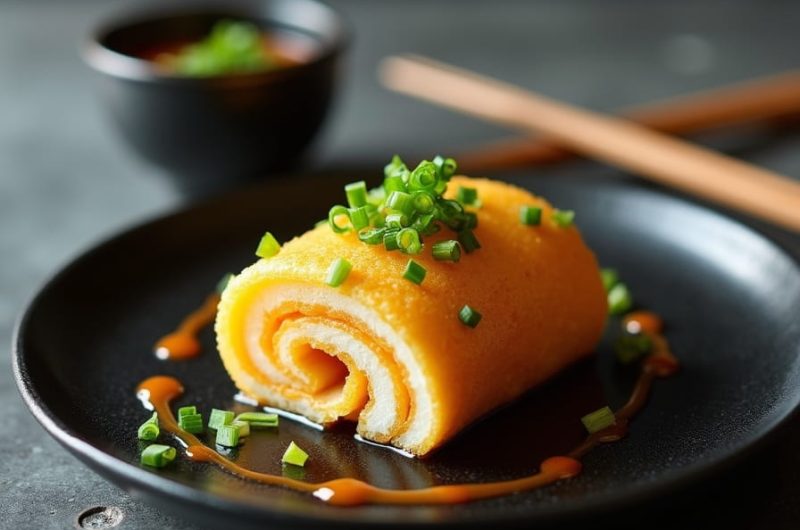
Japanese Tamago, also known as Tamagoyaki, is a classic sweet rolled egg omelette that holds a special place in Japanese cuisine. It is made by gently cooking thin layers of seasoned egg and rolling them into a soft, rectangular omelette.
Tamago is known for its delicate texture, subtle sweetness, and beautifully layered appearance. Often served as part of a traditional Japanese breakfast, in bento boxes, or as a topping for sushi, this dish reflects the simplicity and precision that define Japanese cooking.
Why I Love This Recipe
I love this recipe because it transforms humble eggs into something elegant and comforting. The balance of sweet and savory flavors is soothing, and the soft, custard-like texture makes it incredibly enjoyable. It is also satisfying to prepare, as each layer builds into a neatly rolled omelette that looks as good as it tastes.
Why This Is a Must-Try Dish
This is a must-try dish because it introduces the fundamentals of Japanese cooking in a simple, approachable way. Japanese Tamago teaches attention to heat control, balance of flavors, and technique. It is versatile, suitable for any time of day, and pairs beautifully with rice, vegetables, or seafood, making it a valuable addition to any home cook’s repertoire.
Preparation Time, Cooking Time, and Serving Information
Preparation Time: 10 minutes
Cooking Time: 10 minutes
Total Time: 20 minutes
Servings: 2
Calories: Approximately 180 calories per serving
Course: Breakfast, Side Dish
Cuisine: Japanese
Ingredients
For the Tamago
- 4 large eggs
- 1 tablespoon sugar
- 1 teaspoon soy sauce
- 1 teaspoon mirin
- 1 tablespoon milk or water
- Neutral oil for greasing the pan
Cooking Directions
Preparing the Egg Mixture
Crack the eggs into a bowl and gently whisk until combined without incorporating too much air. Add sugar, soy sauce, mirin, and milk or water. Mix until the sugar dissolves and the mixture is smooth.
Heating the Pan
Heat a tamagoyaki pan or small nonstick skillet over low to medium heat. Lightly grease the pan with oil.
Cooking and Rolling
Pour a thin layer of egg mixture into the pan, tilting to coat evenly. When the egg is mostly set but slightly moist on top, roll it gently from one end to the other. Push the rolled egg to the far side of the pan, lightly oil the pan again, and repeat with another thin layer.
Finishing the Omelette
Continue adding layers and rolling until all the egg mixture is used. Shape the omelette gently in the pan and remove from heat.
Step-by-Step Preparation Method
Step 1: Whisk eggs with sugar, soy sauce, mirin, and milk.
Step 2: Heat and lightly oil the pan over low heat.
Step 3: Pour in a thin layer of egg and cook gently.
Step 4: Roll the egg once mostly set.
Step 5: Add another layer and roll again.
Step 6: Repeat until all egg mixture is used and shape the omelette.
How to Serve This Recipe
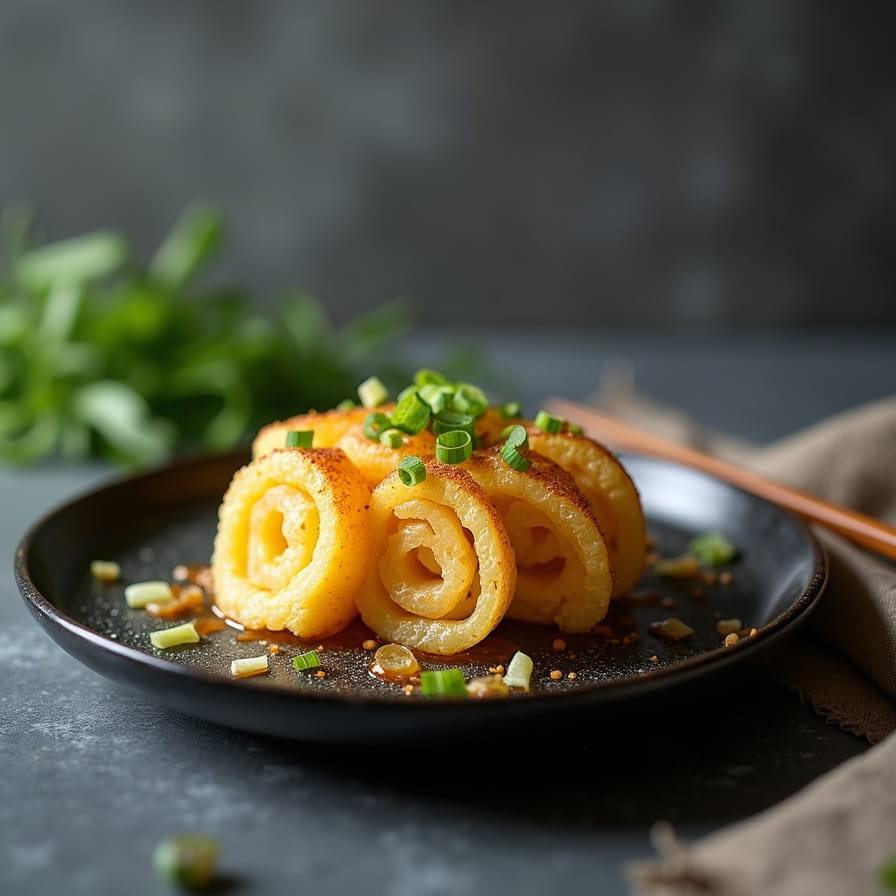
Slice Japanese Tamago into thick pieces and serve warm or at room temperature. It pairs well with steamed rice, miso soup, and pickled vegetables. It can also be served in bento boxes or used as a topping for sushi.
Recipe Tips
Low Heat Is Key: Cook slowly to achieve a soft, tender texture.
Thin Layers: Use thin layers for even cooking and neat rolls.
Do Not Overmix: Avoid excessive whisking to keep the texture smooth.
Practice Makes Perfect: The rolling technique improves with practice.
Variations
Savory Tamago: Reduce sugar and add finely chopped scallions.
Dashi Tamago: Add a small amount of dashi for a deeper umami flavor.
Honey Tamago: Replace sugar with honey for a softer sweetness.
Vegetable Tamago: Add finely chopped spinach or carrots for color and nutrition.
Freezing and Storage
Refrigeration: Store in an airtight container in the refrigerator for up to 2 days.
Freezing: Freezing is not recommended, as the texture of the eggs may change.
Special Equipment Needed
- Tamagoyaki pan or small nonstick skillet
- Silicone spatula or chopsticks
- Mixing bowl
- Whisk
Frequently Asked Questions
Is tamago sweet or savory?
It is lightly sweet with a subtle savory balance.
Can I make this without a tamagoyaki pan?
Yes, a small nonstick skillet works well.
Why is my tamago dry?
Cooking at too high a heat can dry out the eggs.
Can I serve tamago cold?
Yes, it tastes good both warm and chilled.
Conclusion
Japanese Tamago is a simple yet refined dish that showcases the beauty of technique and balance in Japanese cooking. With its soft texture, gentle sweetness, and elegant presentation, it is a comforting and versatile recipe that works for breakfast, lunch, or as a side dish. Mastering this dish not only adds a classic recipe to your collection but also deepens your appreciation for thoughtful, detail-oriented cooking.
Japanese Tamago (Sweet Rolled Egg Omelette)

Ingredients
- For the Tamago
- 4 large eggs
- 1 tablespoon sugar
- 1 teaspoon soy sauce
- 1 teaspoon mirin
- 1 tablespoon milk or water
- Neutral oil for greasing the pan
Instructions
- Step 1: Whisk eggs with sugar, soy sauce, mirin, and milk.
- Step 2: Heat and lightly oil the pan over low heat.
- Step 3: Pour in a thin layer of egg and cook gently.
- Step 4: Roll the egg once mostly set.
- Step 5: Add another layer and roll again.
- Step 6: Repeat until all egg mixture is used and shape the omelette.