Step 1: Cook the Rice : Rinse the rice under cold water until the water runs clear. Cook the rice using a rice cooker or on the stovetop according to package instructions. Fluff with a fork and keep warm. Mix in a drizzle of sesame oil for fragrance if desired.
Step 2: Prepare the Vegetables : Blanch spinach and bean sprouts in boiling water for 1–2 minutes each, then rinse under cold water. Squeeze excess water from the spinach and bean sprouts, season with a few drops of sesame oil and a pinch of salt. Sauté carrots and zucchini separately in a lightly oiled pan for 1–2 minutes each until slightly tender. Season lightly with salt. Sauté mushrooms in the same pan with a teaspoon of soy sauce until soft and fragrant. (Keep each vegetable separate for a beautiful presentation.)
Step 3: Cook the Beef (or Protein of Choice) : In a small bowl, mix soy sauce, sugar, sesame oil, garlic, and pepper. Marinate the beef slices for 10–15 minutes. Heat a pan over medium-high heat and cook the beef until browned and caramelized. Set aside.
Step 4: Make the Gochujang Sauce : In a small bowl, whisk together gochujang, soy sauce, sesame oil, honey, rice vinegar, garlic, and water. Adjust sweetness or spice to taste.
Step 5: Fry the Eggs : Heat a small nonstick pan with a drizzle of oil. Crack an egg into the pan and cook sunny-side up until whites are set but yolk remains runny. Repeat for all four eggs.
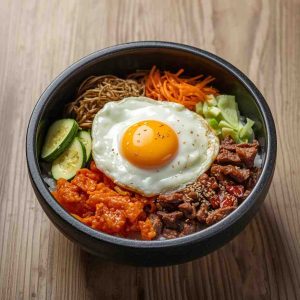
Step 6: Assemble the Bibimbap : Divide warm rice among 4 large bowls. Arrange the vegetables beautifully on top in sections — carrots, spinach, mushrooms, zucchini, and bean sprouts. Add a portion of grilled beef (or tofu) in the center. Place a fried egg on top. Sprinkle with sesame seeds and green onions. Drizzle gochujang sauce or serve it on the side.